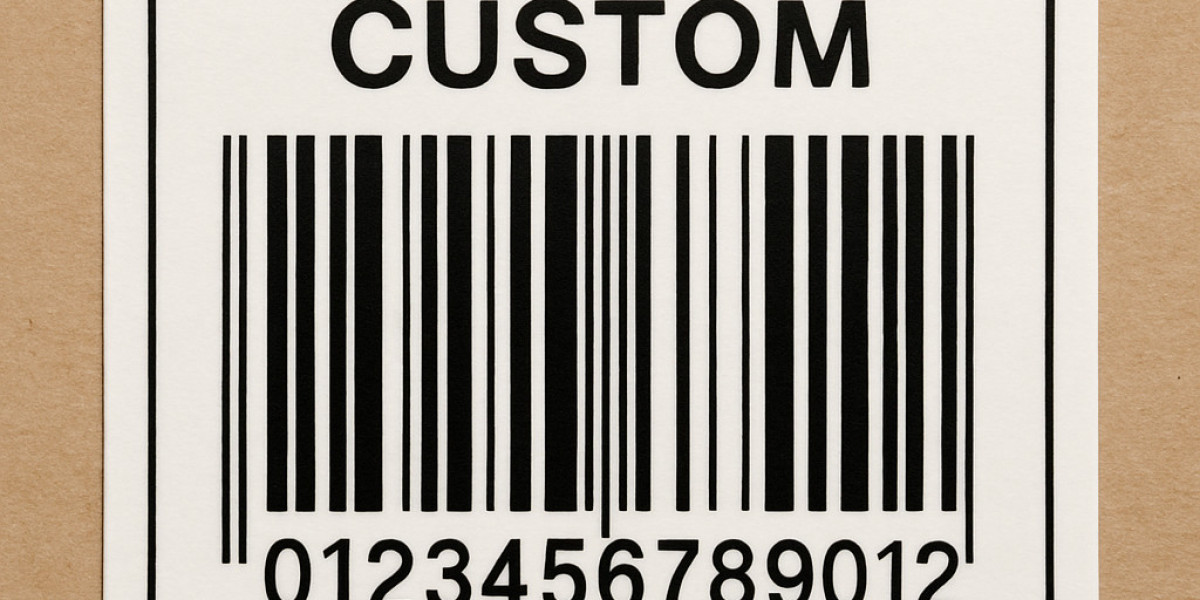
Custom barcode stickers have become an essential tool for businesses across various industries. Whether you're managing inventory, enhancing product traceability, or streamlining checkout processes, custom barcode stickers offer a cost-effective and efficient solution. These small, scannable labels pack a wealth of information and can be tailored to meet the specific needs of your operation. In this guide, we'll explore everything about custom barcode sticker—from their design and materials to their applications and benefits.
What Are Custom Barcode Stickers?
Custom barcode stickers are adhesive labels that feature a unique barcode design and can be personalized to suit particular business or product requirements. Unlike generic barcode labels, custom barcode stickers can be printed with:
Unique serial numbers or SKU codes
Company branding (logos, colors, fonts)
Variable data (product name, size, batch number)
Specific barcode formats (UPC, QR code, Code 128, EAN-13, etc.)
These stickers are widely used in industries such as retail, healthcare, manufacturing, logistics, and warehousing.
Types of Barcode Formats Used
UPC (Universal Product Code): Commonly used in retail environments.
EAN (European Article Number): Similar to UPC, used internationally.
Code 39 / Code 128: Used in logistics and inventory management.
QR Codes: Can hold large amounts of data, often used for marketing or product details.
Data Matrix: Ideal for small products in medical or electronic sectors.
Choosing the right barcode format depends on the application and scanner compatibility.
Materials Used for Custom Barcode Stickers
Custom barcode stickers can be printed on a wide range of materials based on where and how they will be used:
Paper: Economical and suitable for indoor use. Often used for retail or short-term labeling.
Polyester (PET): Durable and resistant to chemicals, heat, and water. Ideal for industrial or outdoor use.
Polypropylene (BOPP): Water-resistant and tear-resistant, commonly used for product packaging.
Vinyl: Offers excellent flexibility and durability; used in harsh or curved surface applications.
Tamper-Evident Materials: Used for security applications where unauthorized removal must be detected.
These materials can also come with various finishes such as matte, gloss, or thermal coating.
Customization Options
Custom barcode stickers can be tailored in numerous ways:
Size & Shape: Available in standard and custom sizes, die-cut shapes, or rolls.
Color Printing: Can include brand colors, background images, or multi-color logos.
Adhesive Types: Permanent, removable, freezer-grade, or high-tack adhesives depending on the surface and environment.
Lamination: For extra protection against moisture, abrasion, or chemicals.
Sequential Numbering: Essential for tracking and serialized inventory.
Advanced printing technology allows for high-resolution graphics and precise barcode printing to ensure scan accuracy.
Applications of Custom Barcode Stickers
1. Inventory Management
Custom barcode stickers help businesses keep track of stock levels in warehouses or retail stores. They reduce errors in inventory counts and improve accuracy.
2. Asset Tracking
Businesses and institutions use barcode labels to tag and track equipment, tools, and electronics. This is especially useful in IT and healthcare environments.
3. Retail and Point of Sale
Retailers use barcode stickers for pricing, stock control, and checkout efficiency. They can be customized with branding and product information.
4. Shipping and Logistics
Barcodes on packages ensure efficient tracking from the warehouse to the customer. Scanning barcodes speeds up sorting and delivery processes.
5. Manufacturing and Production Lines
Manufacturers use barcode labels to track raw materials, monitor production stages, and ensure quality control.
6. Healthcare and Pharmaceuticals
Hospitals and labs use barcode stickers for labeling patient records, samples, medications, and medical devices.
Benefits of Using Custom Barcode Stickers
Improved Accuracy: Eliminates manual entry errors by enabling barcode scanning.
Enhanced Efficiency: Streamlines processes in inventory, shipping, and checkout.
Cost-Effective: Affordable solution for managing large quantities of items.
Better Organization: Helps in organizing storage, assets, and product lines.
Increased Security: Tamper-evident options prevent label switching and fraud.
Branding Opportunity: Custom designs help promote brand identity.
Choosing the Right Supplier
When ordering custom barcode stickers, it’s important to select a reliable printing provider. Consider the following:
Experience and reputation in barcode printing
Range of customization options available
Support for variable data and multiple barcode formats
Fast turnaround time and scalable production
Sample proofs before bulk orders
Compatibility with your barcode scanners and software
Conclusion
Custom barcode stickers are a powerful asset for modern businesses seeking to streamline operations, improve traceability, and enhance brand visibility. Whether you're running a small online shop or managing a complex supply chain, investing in quality custom barcode labels can lead to significant time and cost savings. By choosing the right materials, design, and supplier, you can ensure your barcode stickers meet both functional and aesthetic needs—giving your business a professional and efficient edge.