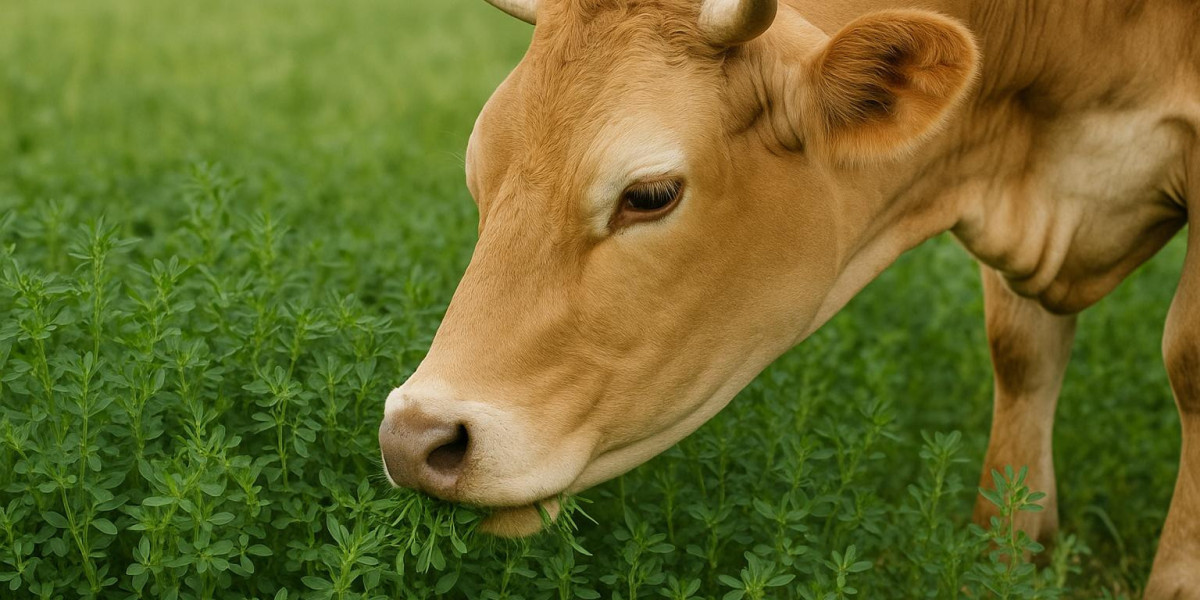
For years, farmers have faced a frustrating dilemma—how to feed livestock without draining their finances on commercial feeds. In the search for cost-effective, nutrient-rich alternatives, alfalfa has steadily emerged as a serious contender. But can it really replace those pricey commercial mixes? Or is this just another green myth riding the wave of “natural is better”?
This has nothing to do with following trends. It involves investigating alfalfa's actual potential as a cost-effective, nutrient-dense, and sustainable feed source. The agricultural industry needs better solutions, ones that are grounded in both science and field-tested pragmatism, given the escalating costs of inputs and variable feed prices.
Let's dissect it.
What Makes Alfalfa Stand Out?
Known as the "Queen of Forages," alfalfa (Medicago sativa) is a perennial legume that has a long history in the livestock feed industry, both literally and figuratively. It's hardly a novel idea. This is a new approach to re-examining it as a key feed solution.
Alfalfa is a good alternative to commercial feeds in several situations because of its many benefits:
- High protein content: Ranges from 15% to 25%, making it suitable for ruminants and some monogastric animals.
- Rich in vitamins and minerals: Especially calcium, potassium, and vitamin A.
But here’s where it becomes more than just “green stuff for cows”. Alfalfa’s digestibility, palatability, and regrowth ability set it apart. Plus, it’s a nitrogen fixer, enhancing soil health for future crops.
In other words, it feeds both animals and land—a dual value that few feed sources can offer.
Cost Comparisons: Dollars and Sense
The cost of commercial feed is the main factor that makes alfalfa appealing to many farmers. Grain markets, energy prices, and supply chain interruptions can all affect the price of commercial animal feed. USDA data shows that from 2020 and 2023, the average price of commercial cattle feed increased by more than 40%.
In the meantime, farmers who cultivate their own alfalfa or even buy it from nearby producers frequently report yearly feed cost reductions of 25–50%. The savings are real, albeit these figures obviously vary depending on transportation, land access, and climate.
Alfalfa is especially advantageous for mixed-farming systems where feed costs eat into profits. The ability to cut and store alfalfa hay several times per year also means it offers flexibility in feed planning. a luxury many small-scale producers don’t usually get.
To start making the switch, many farmers begin by planting a few acres. For those considering a trial, it makes sense to Buy Alfalfa Seeds Online from reputable agricultural suppliers to test soil compatibility and yields before scaling up.
Nutritional Value Beyond Just Protein
Let’s be clear—protein isn’t everything. Many commercial feeds are fortified with specific amino acids, enzymes, and minerals to maximise performance, especially in poultry and swine. So, is alfalfa enough?
Here’s where it gets nuanced. Alfalfa is particularly well-suited for:
- Dairy cattle, due to its high calcium and digestible fiber.
- Goats and sheep, which benefit from its nutrient density.
- Rabbits and horses, who thrive on its balanced composition.
However, it may not fully replace commercial feeds for monogastric species like pigs or poultry, especially during growth or production peaks. In such cases, alfalfa can still act as a complementary feed, reducing the volume—and cost—of commercial inputs.
Not All Alfalfa Is Created Equal
Here’s where some producers go wrong. They assume any bale of alfalfa is premium. But quality depends on factors like:
- Harvesting time: Younger plants have higher protein but lower yield.
- Drying methods: Over-dried hay loses nutrients.
- Storage: Poor storage leads to mold and nutrient loss.
So, while alfalfa can replace commercial feed in many cases, it demands attention to detail. Inconsistent quality will produce inconsistent results—something no producer wants.
Environmental and Agronomic Benefits
If you’re looking at farming beyond just economics, alfalfa checks multiple boxes:
- Soil Health: Its root system enhances soil structure, reduces erosion, and improves microbial activity. Because it fixes atmospheric nitrogen, it also reduces the need for synthetic fertilizers in crop rotation systems.
- Biodiversity: Fields with alfalfa often see increased pollinator activity, contributing to local ecosystems.
- Water Use: Though often criticized for high water demands, alfalfa’s water use efficiency is higher than many row crops. It uses water to produce protein, not just biomass. For comparison, it takes roughly 683 gallons of water to produce 1 kg of alfalfa protein, while soy requires over 1,100 gallons.
In an era of climate volatility and resource limits, crops that build resilience, like alfalfa, deserve a closer look.
"You can’t keep feeding tomorrow’s herds with yesterday’s solutions. Innovation starts with rethinking what’s already in your backyard."
Real-World Results: Farmers Share Their Experience
A small-scale goat dairy in the Central Valley of California started including alfalfa hay into their diet, which resulted in a 60% reduction in the amount of commercial pellets they used. They witnessed an increase in milk butterfat content in addition to a decrease in feed expenses, which was beneficial for their artisanal cheese business.
By incorporating alfalfa into their pasture rotation, a regenerative farm in Iowa reported that it increased overall fodder output and decreased parasite loads in sheep.
These instances are not unique. Alfalfa serves as a link between tradition and science, which farmers are combining throughout the United States and abroad.
External Factors to Consider Before Switching
Still, before anyone pulls the plug on commercial feed entirely, a few cautions:
- Seasonal Availability: In regions with long winters, stored alfalfa must be well-managed to avoid shortages.
- Land Requirements: Not every producer has land to grow forage, making them reliant on alfalfa markets, which can vary.
- Species Suitability: As mentioned, pigs and poultry may need more precise rations that alfalfa alone can’t meet.
Additionally, producers should keep an eye out for bloat in sheep and cattle if alfalfa is fed solely or introduced too rapidly. The safer methods are mix-feeding and gradual integration.
Comparing Alfalfa to Other Forages
While alfalfa is often compared to grass hays or silages, it holds several advantages:
- Faster regrowth cycles: Up to 4–5 cuts per season under optimal conditions.
- Higher protein yield per acre.
- Longer lifespan: Alfalfa stands can remain productive for 3–7 years.
While ryegrass, clover, and timoth hay all have their uses, few are as consistent in yield and nutrient density as alfalfa.
FAQs
- Can alfalfa fully replace commercial feed for dairy cows?
It depends on the herd's production level. For moderate-yield cows, high-quality alfalfa can supply nearly all nutrient needs. For high-output herds, alfalfa should be part of a balanced ration. - Is alfalfa suitable for poultry diets?
Not as a primary feed. However, dried alfalfa meal can be a good supplement, especially for layers, due to its pigment and vitamin content. - How can I avoid bloating issues with alfalfa?
Start by mixing alfalfa with grass hay. Don’t let animals graze lush alfalfa when they’re hungry or wet. Use bloat-prevention strategies, especially during transitions. - Does the age of alfalfa affect its nutritional value?
Yes. Younger alfalfa has more protein and less fiber, while older plants are bulkier but lower in digestibility. Cutting at early bloom is a good balance. - Is it worth growing alfalfa if I only have a few acres?
Yes—especially if you own ruminants. Even a few acres can yield significant savings and feed security.
Thinking Beyond Feed Bags
Alfalfa is worth more than just money. It's about resource efficiency, sustainability, and self-reliance. There is growing pressure on farmers to reduce expenses without sacrificing quality. Despite their convenience, commercial feeds don't always support those objectives.
Alfalfa is a useful tool in the feed toolbox, even though it may not be a panacea. This is especially true for those who are prepared to handle it properly and incorporate it sensibly. Rebalancing, or giving more weight to natural, affordable solutions that have endured over time, is more important than replacing.
Anticipate more farmers returning to crops like alfalfa—not as a compromise, but as an improvement—as agriculture transitions to a future that requires resiliency and frugalness.